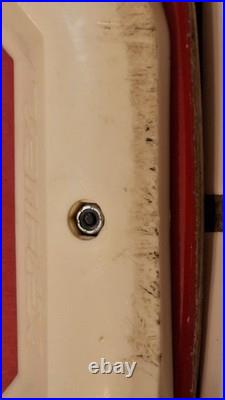
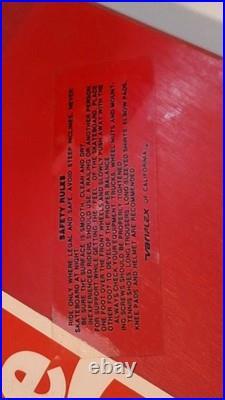
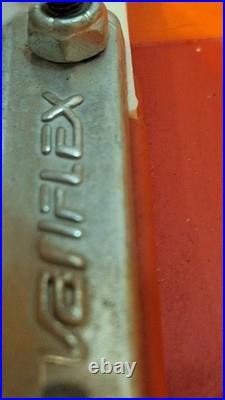
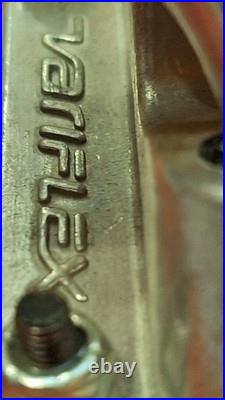
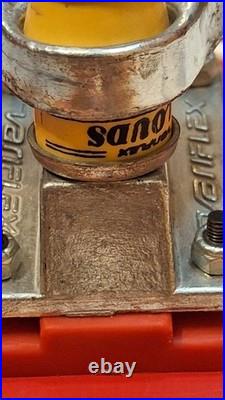
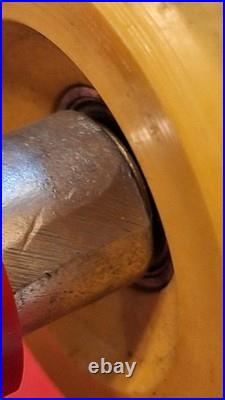
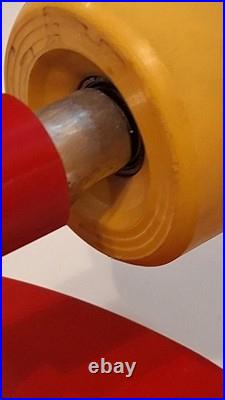
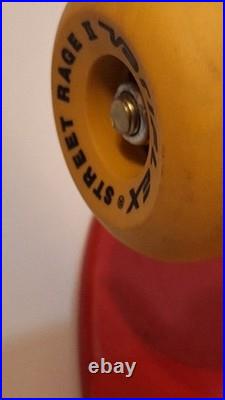
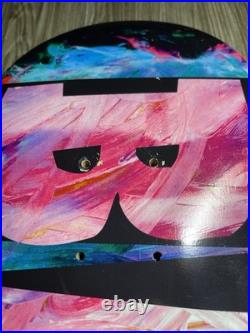
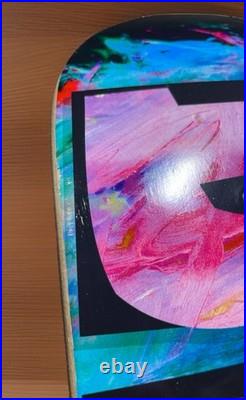
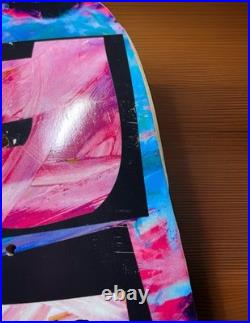
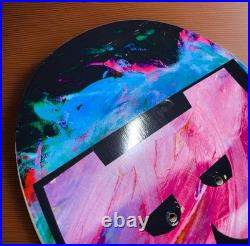
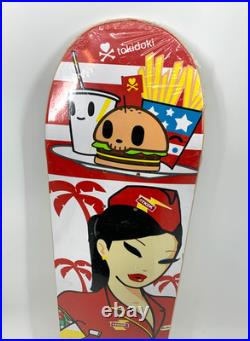
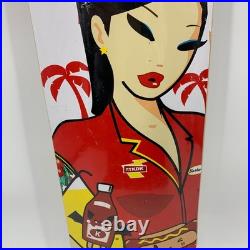
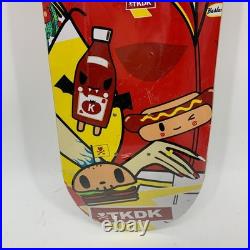
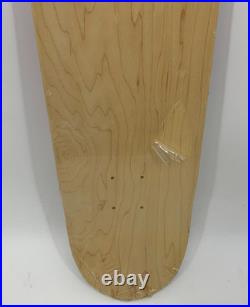
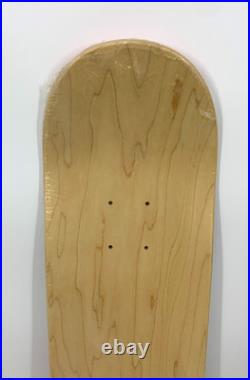
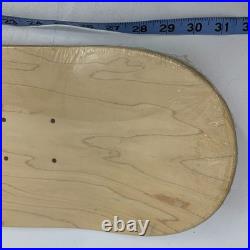
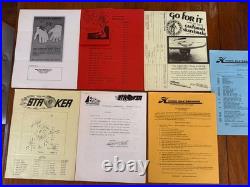
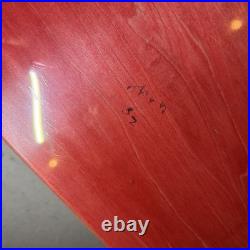
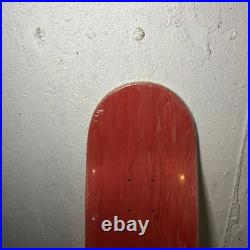
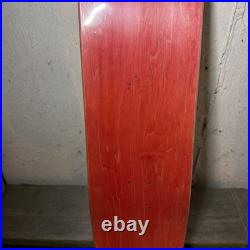
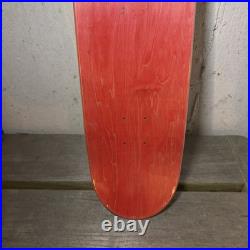
This is a rare 1987 vintage Alf skateboard featuring the TV icon Alf. Produced by Valterra, this retro skating board is a nostalgic piece of skateboarding history.
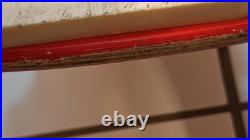
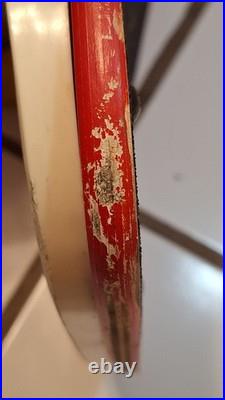
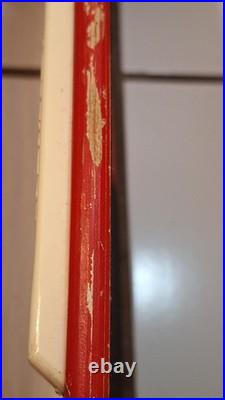
Looks like it may be 1950s.. I love the 50s style chrome paint with woodgrain popping through! I have never seen metal wheels with this same elongated support system underneath (and extra bolts)! Please note the condition of the wheels.. Several are not perfectly round… And attest to the story this board could tell… That massive jump, that double-dog-dare, that friendly push.. 22″ L x 4.25″ W x 3.25 T. However, before skateboards there were scooters, sometimes known as kick scooters and push scooters. Varied forms of scooters have been traced back to the early 1900s, most of them made from wood, metal, or a combination of the two. Scooters had anywhere from two to four wheels. Some of the wheels were metal and others were similar to the wheels on pedal cars. In the 1940s and 1950s, crate scooters made popular sidewalk vehicles. Most crate scooters were handmade. They were relatively inexpensive and simple for kids to construct by using a milk crate or wooden fruit box and metal roller skate wheels attached to a wooden 2 x 4. Eventually kids started removing the boxes and handlebars and just started riding the board with wheels, reminiscent of the famous skateboard scene in the 1985 film. Back to the Future. By the early 1960s, skateboarding started luring participants from the surfer scene. In 1962 a southern California surf shop, Val Surf, began making its own brand of skateboards and struck a deal with Chicago Roller Skate Company for the wheels. The skateboards began to attract everyday surfers who could use the boards when they weren’t in the water, and thus the term “sidewalk surfer” was coined. Additionally, skateboarding gained popularity when Larry Stevenson, publisher of. Promoted it in his monthly magazine. In 1963, Stevenson made the first professional skateboards using the Makaha brand and organized the first known skateboarding contest. That same year saw an evolution in skateboard design with the use of clay (also known as composite) wheels that replaced treacherous metal ones. Moving ahead, in 1964 surf and sailing entrepreneur Hobart “Hobie” Alter joined forces with Vita-Pakt company to make a line of Hobie skateboards; the Hobie line also sponsored several contests and professional skaters. Later that summer, the musical group Jan and Dean performed Sidewalk Surfin. On Dick Clark’s. An event which helped further popularize skateboarding with mainstream society. In 1965, the skateboarding sport peaked as manufacturers tried to keep up with the demand, cranking out an estimated 50 million skateboards between 1963 and 1965. In May, the world’s first skatepark, Surf City in Tucson, Arizona opened to the public.. Skateboard with metal trucks. Old wooden skate deck. Metal wheels for smooth ride. Wooden skateboard with metal wheels. Retro metal wheels skateboard. 60s era skate deck. Vintage skateboard with character. Wooden skateboard with retro charm. Metal wheels for vintage feel. Classic wooden skateboard design. Vintage skateboard for collectors. Antique metal wheels skateboard. Vintage skateboard with history. Wooden deck with metal wheels. Classic skateboard with character. Vintage skateboard from Little Rock, Arkansas.
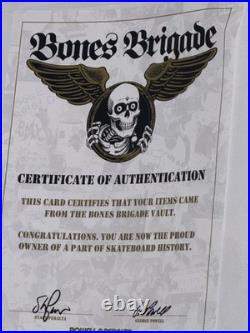
Vintage Powell Peralta Skateboard 80s Tony Hawk Street Deck 1989 Bones Briga 80s Heavily used vintage board with edge chips, tail wear and some laminate splitting. Grip, graphics, wheels and hardware show scuffs, dirt and oxidation. Deck: Seven-ply wood construction with black underside and blue grip-tape top featuring classic Powell Peralta Skateboards skeleton-with-wings “Seven Ply” graphic. Setup: Complete skateboard with Independent Truck Co metal trucks, orange urethane Vision Shredders wheels, and black side deck rails, all as shown in photos. Condition notes: heavy cosmetic wear to graphics, grip-tape, wheels, edges and hardware, plus laminate separation along one deck edge; see photos and video for details. The Powell Peralta “Street Hawk” model was Tony Hawk’s first dedicated street deck, released around 1989. It represents a shift in skateboarding during the late 80s as street skating gained prominence alongside vertical ramp skating. Design & Art: The deck graphic features a small hawk emblem in the upper left of the board, which was a change from his popular “Screaming Chicken Skull” vert graphics. The iconic artwork for Powell Peralta, including many of Tony Hawk’s graphics, was created by artist Vernon Courtlandt Johnson (VCJ). Construction: The original decks were made with a seven-ply wood construction using US hard rock maple. Target Discipline: Unlike his earlier wider vert boards, this was designed specifically as a street board. The shape was part of Powell Peralta’s transition into street-specific designs, featuring a mild kicknose in the later production runs.
One of the very first! Circa 1960 – somethin. A rare, special, piece of Americana! Small at 18.75″ Long x 4.75″ W. Coined as a way to learn how to surf better…. Or in this case Sidewalk Surfing. Just enough use and patina to give her that street creed. Hedlund Skateboards were produced by the Hedlund Manufacturing Company, founded in 1949 by Swan Hedlund in Nokomis, Illinois. Initially specializing in snow skis, the company expanded into skateboard production during the 1960s, a period when skateboarding was gaining popularity in the United States. One of their notable skateboard lines was the “Roller Surfer” series, which included models such as the #100, #200, and #500. The Roller Surfer #100, for instance, measured 4.4 inches in width and 18.9 inches in length. The #500 models featured variations in design, including differences in tail shape and truck mounting configurations. Some of these boards bore graphics depicting a skier silhouette beneath the Hedlund logo, reflecting the company’s roots in ski manufacturing. However, before skateboards there were scooters, sometimes known as kick scooters and push scooters. Varied forms of scooters have been traced back to the early 1900s, most of them made from wood, metal, or a combination of the two. Scooters had anywhere from two to four wheels. Some of the wheels were metal and others were similar to the wheels on pedal cars. In the 1940s and 1950s, crate scooters made popular sidewalk vehicles. Most crate scooters were handmade. They were relatively inexpensive and simple for kids to construct by using a milk crate or wooden fruit box and metal roller skate wheels attached to a wooden 2 x 4. Eventually kids started removing the boxes and handlebars and just started riding the board with wheels, reminiscent of the famous skateboard scene in the 1985 film. Back to the Future. By the early 1960s, skateboarding started luring participants from the surfer scene. In 1962 a southern California surf shop, Val Surf, began making its own brand of skateboards and struck a deal with Chicago Roller Skate Company for the wheels. The skateboards began to attract everyday surfers who could use the boards when they weren’t in the water, and thus the term “sidewalk surfer” was coined. Additionally, skateboarding gained popularity when Larry Stevenson, publisher of. Promoted it in his monthly magazine. In 1963, Stevenson made the first professional skateboards using the Makaha brand and organized the first known skateboarding contest. That same year saw an evolution in skateboard design with the use of clay (also known as composite) wheels that replaced treacherous metal ones. Moving ahead, in 1964 surf and sailing entrepreneur Hobart “Hobie” Alter joined forces with Vita-Pakt company to make a line of Hobie skateboards; the Hobie line also sponsored several contests and professional skaters. Later that summer, the musical group Jan and Dean performed Sidewalk Surfin. On Dick Clark’s. An event which helped further popularize skateboarding with mainstream society. In 1965, the skateboarding sport peaked as manufacturers tried to keep up with the demand, cranking out an estimated 50 million skateboards between 1963 and 1965. In May, the world’s first skatepark, Surf City in Tucson, Arizona opened to the public..
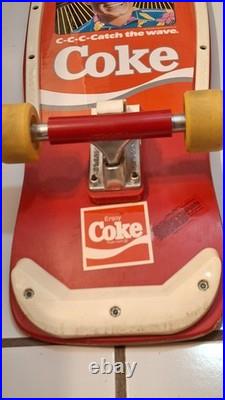
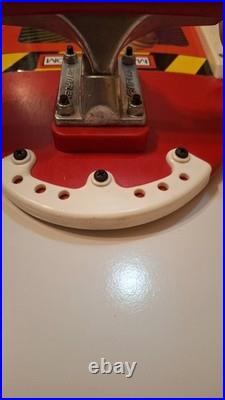
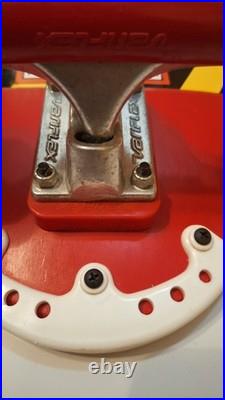
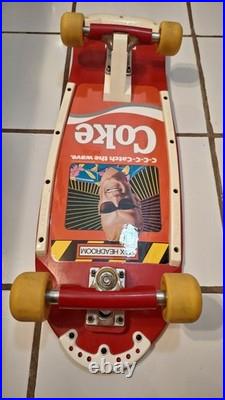
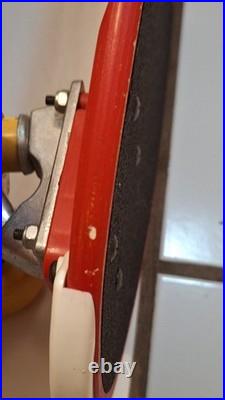
Preowned but still in good condition. Normal wear from use. The front bumper guard came off – SEE LAST PICTURE. Approx 29 x 9 x 4 inches. Don’t miss out!!
Here it is the holy grail of your 80′s kids childhood. These pop up on occasion but usually looking like they’ve been beaten to death over 38 years. Based on the tires it doesn’t look like this Alley Cat has ever seen the streets. The screen printing is as vibrant as the day this hit the shelves back in 87. Considering what it is… A skateboard made for 80′s dare devil boys…. This is quite the well preserved find. Honestly I don’t want to sell it. I remember getting this as a gift on Christmas day in the late 80′s. The wrapped present was so oddly shaped I just had to poke my finger through the wrapping paper to sneak a peak. I could patch that hole up easily.. When I saw that vibrant orange cat… I had to see more…. I kept widening the hole until the whole board was exposed. It just looked that good. Of course I completely destroyed my board within two years but I never stopped thinking about it. Finally around the age of 38…. I had to find another. I’d like it to go to someone who appreciates it as much as I do. If it doesn’t sell…. I could lower the price but I don’t want it to be underappreciated or destroyed. There are some marks and scuffs here and there and I could easily touch them up but I feel that would devalue it. Perfect gift for yourself, or if you’re making a 1980′s based Netflix series and you need a pristine prop that will trigger awesome memories… Heres your one and only shot. What you see is what you get. If you need additional photos or descriptions of anything in particular shoot me a message.
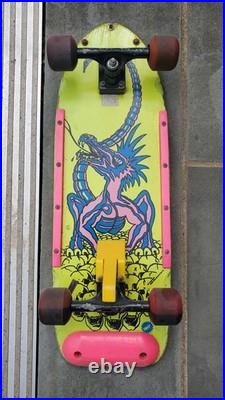
Vintage Jeff Kendall Snake skateboard deck manufactured in 1989. Neon green grip tape with original yellow Big Ugly rails from the 1989. This deck has a gorgeous patina gently revealing maroon woodgrain peeking through the original purple. There appears to be no damage to the deck incurred from any rail slides. There are mild scratches on the rails themselves. There is very mild wear on the tail indicating minimal original use. This deck has an antique classic look with very minimal use blemishes. This will be a very unique and rare original to add to your collection!
The Vintage 1970′s Universal Big Grabber Skateboard Wheels with OG Bearings are a rare find for collectors and enthusiasts of vintage skateboarding. Made in the United States, these wheels are perfect for a classic 1970′s style skateboard, adding a touch of nostalgia to any collection. The Universal Big Grabber brand and OG (Original) bearings ensure authenticity and quality, making these wheels a valuable addition to any skateboarding memorabilia.